Legionella is undoubtedly a Risk Factor which Irish Establishments are increasingly being forced to take cognisance of.
Fitz Scientific offers services specifically tailored to the Irish market, including:
Fitz Scientific acknowledges the fact that there have only been relatively few, isolated incidents reported thus far within Ireland, but believe this is largely a function of the lack of awareness and that the prevalence of these types of incidents is going to increase dramatically as a result of increased awareness and pressure from local and international bodies.
In Ireland, under occupational Health and Safety legislation, there is a legal obligation on employers to carry out a risk assessment in relation to legionella prevention and control in the workplace and where a risk is identified the appropriate control measures should be put into place and a risk management plan adopted.
In Sept 2009, The Health Protection Surveillance Centre (HPSC) published updated ‘National Guidelines for the Control of Legionnaires Disease in Ireland 2009’. They provide advice on identifying and assessing the potential risks associated with legionella in various environments and how to prevent and manage the risk.
The guidelines also recommend that a Risk Assessment should be undertaken by an organisation which is independant of other contractors that maybe providing water treatment or on going maintenance of water systems.
The undertaking of suitable on site Legionella Risk Assessment is imperative and will form the essential first stage in implementing an effective and targeted Legionella risk identification, risk elimination and risk management program and provide the necessary tools to attain internationally recognised standards for Legionella monitoring & control. Once in place, an interactive management approach will be adopted and with a view of concentrating efforts on important and high priority risk reduction.
What is Legionella?
Legionella bacteria are found naturally in the environment (water & soil) and are the bacteria responsible for causing the respiratory disease Legionnaire's Disease. A term frequently used to describe Legionnaire's disease is Legionellosis, which is merely the collective term describing any illness caused by the bacteria Legionella pneumophila and includes Pontiac Fever (milder non pneumonia flu-like illness).
Legionnaire's disease is considered very serious and is responsible for numerous fatalities worldwide every year.
Infection & Symptoms
Populations most at risk from Legionnaires' disease include, but are not limited to, the elderly, immuno-compromised individuals, immuno-suppressed individuals and individuals with pulmonary or liver dysfunction.
Typically the first symptoms will develop within a week of infection with the incubation period being 2-10 days.
Symptoms range from a mild cough and low fever to rapidly progressive pneumonia and coma. Early symptoms include muscular pain, headaches and flu-like symptoms. Later symptoms include high fever, dry cough, diarrhoea, shortness of breath, development of pneumonia and in some cases death. Unless identified and treated immediately the disease will worsen, become more severe and potentially result in fatality.
Legionella Ecology
Legionella bacteria proliferate within water from 20 – 45oC with 32 – 37oC considered as optimum. Although Legionella bacteria are killed when temperature exceeds 70oC they remain dormant at temperatures below 20oC. In addition to a favourable temperature profile Legionella require a food source (e.g. any organic matter or corrosion within the system) as well as a suitable microhabitat such as biofilm.
Instead of growing in the open or bulk water, Legionella find a niche and proliferate within biofilms and protozoa. These biofilms consist of a thin film of bacteria (it feels slimy if one runs a finger on the inner surface of tank, sump etc.), are found naturally within water systems particularly if stagnant conditions prevail and can only be removed through effective cleaning and disinfection procedures.
Recorded outbreaks of Legionnaire's disease have been associated with many different water systems including the following;
In order to fully appreciate the potential risks posed by Legionella it is important to obtain an insight into the dynamics and the risks surrounding Legionella and this includes the Legionella causation chain. If a simplistic view is taken the causation chain can be considered to include the following;
Legionella Causation Chain
If you operate water systems such as showers, cooling towers, spray systems etc. which result in the creation of an aerosol, the potential exists for a foreseeable risk of exposure to Legionella. It is essential that a holistic view is taken and the entire water system supplying the aerosol generating outlets is correctly managed (source to aerosol approach).
In the UK many of the high profile cases surrounding Legionella, are as a result of negligence (lack of suitable or defined Legionella Management Plan and the combination of poorly maintained water systems) and have unfortunately led to serious illness and fatalities, leaving those responsible with commercial and criminal liability.
THE LEGIONELLA RISK ASSESSMENT
Legionella Risk Assessment includes a holistic approach to all water systems with an assessment from "source" (i.e. where the water makeup source comes from) to "aerosol" (i.e. where the water is aerolised and potential for exposure exists). All risks are assessed & evaluated according to the Legionella Causation Chain.
The scope of Legionella Risk Assessment extends to the following on site water systems;
Legionella Risk Assessment Report forms the basis of the site specific Legionella Management Plan and includes the following:
Fitz Scientific will carry out an independent Legionella Risk Assessment, as well as provide an insight and advice on what to expect from your chosen water treatment contractor. Following an on site Legionella Risk Assessment a site specific Legionella Management Plan and Legionella Logbook will be drafted to ensure the implementation of a suitable program to ensure compliance and ultimately the reduction of on site health & safety risks.
Facilities risk assessed include; factories, mining, hotels, hospitals, shopping centres, buildings, airports, manufacturing plants, casinos, universities etc.
Cleaning and Disinfection of on site water systems is vitally important and an intricate part of an effective Legionella control program. All cleaning and disinfection work is carried out by trained personnel according to internationally recognised standards and includes both pre and post disinfection, adequate biocide residuals and contact time, suitable neutralisation and the use of approved PPE (personal protective equipment).
Site specific Legionella Training is vitally important and includes a general awareness course for all individuals involved / interested in Legionella control.
LEGIONELLA SAMPLING
A monitoring programme for Legionella should include the routine sampling and testing for the presence of bacteria, both general (aerobic) bacterial species and legionella bacteria. Since the detection of legionella bacteria requires specialist laboratory techniques, routine monitoring for aerobic bacteria is used as in indication of whether microbiological control is being achieved.
Sampling for Legionella in water systems is carried out in accordance with British Standard BS 7592:2008 (Sampling for Legionella bacteria on water systems – Code of practice).
LEGIONELLA ANALYSIS
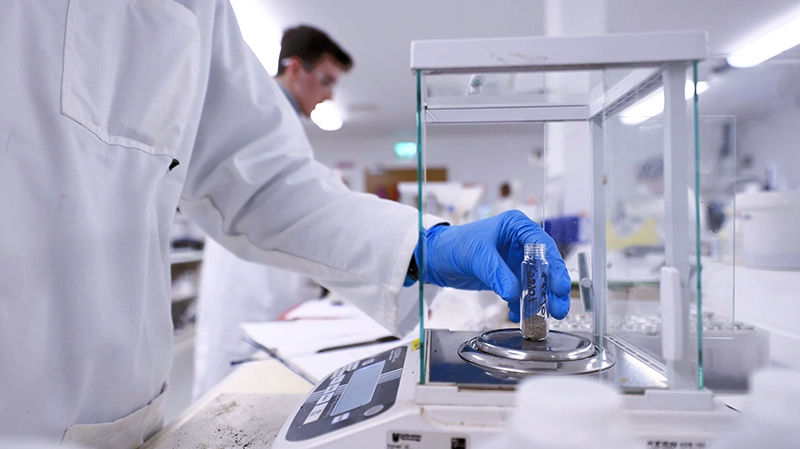
Methods used for testing environmental samples for Legionella at Fitz Scientific are based ISO 11731:1998 (Detection and Enumeration of Legionella), the International Organization for Standardization (ISO) standard reference method.
For more information on how Fitz Scientific can assist with the identification and analysis of Legionella in your workplace please don’t hesitate to call today 041 98 45440 or visit our website www.fitzsci.ie